Wednesday, September 28, 2005

Naked woman alert

For our lunchtime entertainment, People for the Ethical Treatment of Animals promises to put a naked woman on display near the courthouse in downtown Billings at noon tomorrow. According to a news release:

Wearing nothing but shackles and covered in “scars” as a result of violent “beatings”—an everyday reality for animals in circuses—a woman will protest the arrival of Ringling Bros. and Barnum & Bailey Circus. She will be joined by protesters holding a banner that reads, “Shackled, Lonely, Beaten,” while others show footage of elephant beatings on body screen TVs and hold poster-size photos of animals who have died at Ringling’s hands ... . “If it takes exposing some of my skin to expose the cruelty that goes on behind the scenes at the circus, I’m happy to do it,” says PETA spokesperson Julie Kelton. “I only have to spend a few minutes in chains, while animals in circuses must endure a lifetime of chains, cages, and beatings.”


Plus, they have to perform in the nude.

Tuesday, September 27, 2005

The governor's list

John Clayton and wife just stopped by to say hello, and he told me I am on the governor's blogroll. Gee, maybe I should pick up the pace around here a bit.

On the other hand, I am a veritable gasbag compared to this entry on the governor's list.

Sunday, September 25, 2005

Tussing tussle

Good column today by Ed Kemmick on the Ron Tussing contract dispute. It made me wonder: Why doesn't Tussing just promise that, if elected, he'll give the $160,000 back to the city? He says he doesn't actually have the money, but a newly elected top city official with a long career in law enforcement ought to be able to scrounge it up somewhere.

I know I'd want to vote for a candidate who promised that the first thing he'd do if elected is donate enough of his personal wealth to pay for a police officer for five years. How could Al Garver top that? He'd have to offer to build a fire station!

Saturday, September 24, 2005

Unconstitutional Constitution Day

The Cato Institute makes the best case I've seen that the law requiring students to learn about the Constitution on or about Sept. 17 is itself unconstitutional.

Is it really possible to argue that the Cato Institute is wrong? Or do we just not give a damn what the Constitution says anymore?

Thursday, September 22, 2005

Scooped again

I teach two classes at Rocky Mountain College, but one of them is early in the morning and the other is late in the evening. I'm rarely around during normal hours, and I'm not on campus e-mail. So perhaps it's not too surprising that I didn't hear about this until I got up this morning. Quite likely, I was the very last Rocky employee to know.

So I skipped reporting on the story in blissful ignorance. But it made me wonder: If I had gotten my hands on that e-mail Tuesday afternoon, with the eerie note that essentially asks me as a faculty member not to talk to myself as a reporter, would I have gotten the story in this week's Outpost? A year ago I think the answer would have been easy. But how willing would I be now to risk the job that supports me in order to shore up the nonpaying hobby that is slowly grinding me down?

The correct response may be this: When you start asking yourself that kind of question, you already know the answer.

Sunday, September 18, 2005

So who won?

When I saw The Gazette's count on Thursday of who won which box in the City Council election, my heart sank the final eighth of an inch to the dead bottom. The Gazoo had Ron Tussing winning 27 precincts; I had him at 25.

I had a bad feeling that I was wrong. My e-mail program had crashed in the heat of production on Tuesday night, and I fiddled with it for a few hours. By the time I got to the City Council story, it was five or six in the morning and I had been working for 22 straight hours. It was one of those stories I had trouble writing because my chin kept dropping onto my chest.

So yesterday I did a recount. Sure enough, I had made a mistake: I counted a box for Al Garver that should have gone to Larry Brewster. But I still came up with 25 boxes for Tussing, so I had it: Tussing 25; Garver, 9; Brewster, 4; with one box tied between Garver and Tussing. I counted again. Same thing.

Maybe the Gazette corrected its story and I missed it. Maybe I'm still nodding off. Has somebody else made a count?

Sleepless in Montana

I mentioned earlier that Walter Kirn had guest-blogged for Andrew Sullivan. Now he's written a funny essay describing the experience.

Tuesday, September 13, 2005

On to November

I'm no believer in online polls, but it is interesting to note that the Outpost online poll picked the exact order of finish of the six candidates in the mayor's race. We won the hexfecta.

Ron Tussing did considerably better online than in the actual election (47 percent vs. 34 percent), which is consistent with my theory that Tussing supporters are more passionate about their candidate than other voters. Online polls tend to reflect passion more than actual votes. All that passion probably helped Tussing in the primary, but it could hurt him in November if the anti-Tussing forces, with only one other candidate to concentrate on, become as passionate as his supporters are now.

Tussing's online margin came mostly at the expense of Larry Brewster, who did twice as well in the actual primary as in the online poll. Again, that would be consistent with my theory: I don't think anyone felt terribly passionate about
Brewster.

Al Garver, Cliff Hanson and David Bovee all had online results that, when compared to actual votes, would fall within a typical margin of error for a scientific poll. Michael Larson did better at the polls than online, but his totals were so low in both places that the result probably is just an artifact.

So it's Garver vs. Tussing in November. I picked both of the guys to advance, so I might as well go all out and pick again: Garver. Why? Money, for one thing. Garver knows how to get it and how to spend it. Plus, Tuesday's results weren't exactly a repudiation of the incumbent council. Don Jones, Ed Ulledalen and Chris "Shoots" Veis all led their primary races. For all the complaints about how the council handled Tussing's dispute with the city administrator, incumbents (except maybe Brewster) didn't suffer for it.

Finally, I'm sticking by my theory in the second graph. Tussing arouses the strongest emotions, both pro and con, of any candidate in the race. There's no way to know how many votes cast in the primary were really "anti-Tussing" votes, but my guess is that there are enough out there to give Garver the victory.

One caveat: I've only glanced at the precinct-by-precinct totals, but it appears that Tussing did consistently well across nearly all of the city. That could bode well for him.

UPDATE: The Montana News Association seems to have pulled its online poll in the mayor's race, but the last time I checked Tussing had, if memory serves, 1.2 percent of the vote. Now that's sampling error.

Monday, September 12, 2005

Time to vote

If you still haven't made up your mind about the mayor's race, you might want to take a look at the Outpost's online poll. I don't know if the votes mean anything, but the comments are pretty interesting.

N is for News

The Missoula Independent interviews Don Cyphers, the estimable publisher of the detestable Montana News Association.

Funny about that quote from Cyphers: Every time I've ever talked to him, he's mentioned lawyers, too.

Sunday, September 11, 2005

Roberts and privacy

I'm behind, as always (see schedule below), so I just ran across Dave Budge's comments on John Roberts and privacy. Budge takes a routine quote from Justice Ginsberg, brands it "nonsense" and says its logic would lead to constitutional protection for incest and bestiality, among other crimes.

It's amazing how wrong a blogger can be in just a few short sentences. Ginsberg's remarks, unless Budge has taken them wildly out of context, do not in any way seek to protect criminal activity. She seems to be making a point that I have occasionally made: While the Constitution contains no explicit right to privacy, certain privacy rights appear to be inherent in the document, such as the right not to quarter troops in your house, to demand a search warrant or not to incriminate yourself. Those protections don't say it's OK to commit crimes; they merely limit the government's ability to poke around in your personal life to find out if you are committing any crimes. Nothing in the Ginsberg quote indicates that she would disagree with Blackmun's statement that privacy rights are less than absolute.

Roberts may be correct, at least in constitutional terms, to refer to a "so-called" right to privacy. But that term of art in no way diminishes the importance of fundamental constitutional protections aimed at keeping government's nose out of our business. Roberts' attitude toward privacy clearly is a legitimate public interest and ought to be explored in hearings.

Without some federal recognition of privacy rights, then the government might imagine it could come along and confiscate your children's urine. No, wait. It already thinks it can do that.

If Teddy had been in charge

So how did the government handle a natural disaster comparable to Katrina: the San Francisco earthquake of 1906? Curious, I pulled out my copy of Gordon Thomas and Max Morgan Witts’ 1971 book on the topic and scribbled a few notes.

The earthquake itself was quite comparable to Katrina in scope and destruction: some 400 dead, 5,000 injured and 100,000 left homeless by the quake and three days of fire that followed it. Damage estimates ranged as high as $500 million – a large chunk of change in those days.

Government response was about as mixed as you might imagine. At the local level, city officials accomplished little in the early hours and the fire department was ineffective (not really its fault; the chief was mortally injured in the quake and the water was almost entirely unavailable).

Sixteen hours after the quake, “At 11:00 that night, confusion in the streets was as great as ever. … No attempt was made to marshal the remaining means of transportation into any real order; communications, where they existed, were haphazard, and verbal messages were frequently distorted.” Local officials also were accused of covering up an outbreak of bubonic plague.

The brigadier general in charge of U.S. troops in California immediately imposed something close to martial law. Looters and price gougers were treated mercilessly. A man digging in the ruins of a jewelry shop was run through with a bayonet. A shopkeeper who demanded 75 cents for a loaf of bread “was frog-marched outside his shop and executed.”

Dr. Alfred Spalding, part of a medical team, said later, “All along the streets I saw dead bodies placarded ‘shot for stealing.’ Ten men were shot while trying to get into Shreve’s. One man was shot for refusing to carry a hose.”
With no water, troops attempted to head off fire by dynamiting buildings in its path. It’s unclear whether those actions reduced or added to the destruction. Newspapers were filled with rumors and false reports that became conventional wisdom for the next half-century.

The federal government, with Teddy Roosevelt in charge, acted quickly. When the size of the disaster became clear by mid-afternoon the next day, the president immediately authorized federal military and relief intervention. Marines and sailors disembarked from warships earlier that day and formed firefighting squads.

It took Congress 10 minutes to pass $2.5 million in relief. By that time, express trains were on their way with tents, blankets and cots. Within six hours of the earthquake, 700,000 rations were on their way from commissaries in Portland and Seattle. Eventually, some $9 million in relief funds was received.

After the earthquake, bribery charges arose in part over deals made to rebuild. Mayor Eugene Schmitz was acquitted of bribery, but Abraham Ruef, a Republican political kingpin, was convicted and sentenced to 14 years in San Quentin. He served 4½. The body of Police Chief William J. Biggy, who was blamed for the death of a suspect, mysteriously turned up in Oakland Bay.

Wednesday, September 07, 2005

New hours

OK, I think I just about have my fall schedule worked out.

Monday: 8 a.m. to noon, writing tutor at MSU-Billings
12:50-1:50 p.m., teach German at MSU-Billings
2-4 p.m., writing tutor
4-5 p.m., office hours at Rocky

Tuesday: 7:45-9 a.m., teach first-year writing at Rocky Mountain College
9:20-10:35 a.m., sit in on first-year business class (RFE program)
10:30 a.m. to whenever, produce a newspaper

Wednesday: 10 a.m. to noon, writing tutor at MSU-Billings
12:50-1:50 p.m., teach German at MSU-Billings
2-4 p.m., writing tutor
4-5 p.m., office hours at Rocky

Thursday: 7:45-9 a.m., teach first-year writing at Rocky Mountain College
9:20-10:30 a.m., sit in on first-year business class
10:30 a.m. to 6 p.m., deliver newspapers
7-10 p.m., teach journalism class

Friday: 8 a.m. to noon, writing tutor
12:50-1:50 p.m., teach German
2-3:30 p.m., office hours at MSU-Billings
4 p.m. to sometime Sunday night, be a newspaper publisher

What the hell. The rest of the time, I might just blog.

Sunday, August 28, 2005

Missouri wisdom

From the Vandalia (Mo.) Leader: "We're probably the only manufacturing plant in town that shuts down a production line when a customer enters the building."

Blasting BLM

If you haven't been following the discussion of Todd Wilkinson's Outpost column this week, you probably should be.

Friday, August 19, 2005

Debate wrapup

Here's my (belated) analysis of winners and losers in Tuesday night's mayoral debate. My ups and downs just indicate whether I think the candidate helped or hurt his chances. They aren't necessarily related to my overall view of who's winning or which candidate I personally prefer.

David Bovee (up): His candidacy is going nowhere, so anything he did outside of swinging an ax or throwing up on another candidate probably would have helped him. He sounded less versed than some of the others, but rational and mainstream. He probably should come up with a better description of his career than "retired."

Larry Brewster (down): Brewster came across as the apologist for the current council and staff, and that's a tough job. I don't think anybody can win this election who doesn't sound as if he could make things better. Brewster seemed to promise more of the same.

Al Garver (up): Impressive showing. He sounded remarkably well schooled on the issues, quite reasonable and quite articulate. The crowd, which was fairly large and fairly old, had obvious sympathy for his complaints about the wording of the public safety mill levy. In my experience, incumbents generally can bury challengers on the facts -- it takes a long time to get up to speed on all the stuff that government does. But Garver sounded ready to hit the ground running.

Cliff Hanson (down): Came across more as a perpetual candidate than as a committed citizen ready to take the next step in public service. He seemed to lack clear vision and goals, and he was the only candidate who sounded at all downbeat about Billings' future. While that may be rational, it's probably not good politics.

Michael Larson (up): He's not an incumbent, but he's a fairly recent council member, which puts him a tricky position. He could criticize recent council decisions without sharing the blame, but he still needed to sound as if the city did something right in the eight years he helped run it. In my view, he handled the challenge masterfully. He's well versed on the issues, thoroughly articulate, and is able to sound like he is making bold pronouncements while actually outlining positions nearly everyone would agree with. Probably the big winner of the debate.

Ron Tussing (neutral): He carries lots of baggage in this race, some helpful and some not. The Tussing supporters were by far the most visible in the crowd, and they didn't hear anything to change their minds. But I'm not sure that voters who are skeptical about his motives and diplomacy heard anything to change their minds either.

My straight news account is here.

Wednesday, August 17, 2005

Kirn on Sullivan

A fellow Montanan, Walter Kirn, is guest blogging for Andrew Sullivan.

It's a good thing somebody is blogging. Just when you thought this blog couldn't get any deader, it's about to. I'm back to teaching next week, two courses at Rocky(freshmen comp and journalism) and one -- at least -- at MSU-Billings (second-year German). I probably also will still be doing some tutoring. And still trying to put out a paper.

Any resemblance between this site and an actual blog will be purely superficial.

In the meantime, though, I've been following, and occasionally contributing to, this discussion over at Press Think. Important topic but, as always, lots of blather in the comments.

Sunday, August 07, 2005

Just say don't go

Here's an oddity: a Montana-based website "committed to stopping the militarization of our schools."

Saturday, August 06, 2005

Rack update update

I've now talked to two business managers who say that Community Racks of Montana had given them the impression that free publications had been contacted in advance before their racks were removed. Neither was happy to hear that wasn't true, and one offered to let us right back in. We may not have lost this thing yet.

Sad news

Over at The Outpost site, an anonymous commenter posted this profound thought:

It's not the 6,000 votes that typically vote "no" in Billings' school mill levy elections that bother me. It is the fewer than 4,000 voting "yes." With 16,000 students, and at least one parent of each student, it's sad to see such apathy. Maybe parents don't see the needs. There's a lot of work to be done, isn't there?

Friday, August 05, 2005

Rack update

In response to some of the comments below, it occurs to me that I haven't been as clear about the rack distribution mess as I ought to be.

There actually are two companies out there signing stores to distribution agreements. One is River's Edge Distribution of Great Falls, which is owned by the Great Falls Tribune, which is owned by Gannett, which is the nation's largest newspaper company -- one of the few left with the resources to swallow somebody like Lee Enterprises. River's Edge is the Montana branch of DistribuTech, which has the national contract for publications in Albertsons stores.

The other company is Community Racks of Montana, described in the post below. It claims to have contracts with the two big IGAs, County Markets, Western Drug and a few other places. I am still trying to confirm whether these contracts are legitimate.

Tony asks, What can be done? I wish I knew. Since the Albertsons agreement appears to be national, local managers probably are impervious to pressure. But a little pressure never hurts. For various reasons, I don't really think the Trib is in this for the money; I think it wants to protect access for its own (and Gannett's?) free publications. If a few local newspapers should happen to fold ... well, Gannett could live with that. In some respects, I would feel safer if the Trib was in it for the money.

Community Racks, I suspect, is just in it for the money, and its managers may be too stupid to know that alienating their potential customers to death isn't a bright way to start a business. I'm a little nervous about going public with all of this in The Outpost (do I really want to advertise the fact that some rack locations may get paid while others don't?), but I think that's probably what I ought to do.

Monday, August 01, 2005

On the rack

I'm still not sure how much I will write about this in The Outpost, since it's such insider stuff and since I don't know that anybody gives a damn, but here's a draft of a letter I'm working on to local merchants that have agreed to have our racks pulled from their stores:

Dear xxxxx,
A company named Community Racks of Montana alleges that it has obtained your permission to remove our distribution rack from your store. Since I have no reason to rely upon the veracity of this company’s representatives, I am writing to ask you to verify whether this is in fact the truth.

If you have indeed signed an agreement with this company, I would appreciate your letting me know why. You should be aware that, although this company appears to have signed agreements with some local businesses as early as June, it provided no notice whatsoever to us or, apparently, to other publishers, until last Friday. The notice it did provide gave no indication of any intention to remove any racks; however, at least some of our racks already were gone by the very next day. At this writing, we still do not know where all of these racks are. I have heard from other business owners that this company has used this same tactic in at least one other Montana city, desisting only under threat of legal action. At this writing, we still have received no coherent business offer from this company. I am having difficulty believing that you would jeopardize the reputation of your business by contracting with an outfit of this caliber.

Moreover, Community Racks has been unable, or unwilling, to demonstrate to me that it has any agreement in place that allows it to remove our racks. We obtained your permission to be in your store; obviously, you have the right to withdraw that permission, but I have seen no convincing evidence that you have done so. The two sample contracts that Community Racks provided to me upon my demand referred to “marketing materials” and to “free magazines, flyers and brochures.” They contained no reference to newspapers; in fact, one of the contracts clearly distinguished between this company’s “free standing Displays” and “newspaper stands.” I have no way of knowing what your intention was when you signed this agreement, if in fact you did sign it, and I am asking that you please clarify your intentions.

If you did intend to include The Outpost in any agreement you signed, I would ask that you reconsider that decision. I hope you understand that The Outpost is in no way comparable, either under law or in common understanding, to the materials mentioned in this agreement. The Outpost provides a wide range of news articles, commentary, public affairs information and cultural coverage. We devote hundreds of column inches each issue and thousands of man-hours each year to giving readers vital information about nonprofit activities, government and the community. We have sponsored and organized gubernatorial debates, music awards programs and public affairs television programming. We are media sponsors of the Alberta Bair Theater and the Billings Symphony, and we are key sponsors each year of the MSU-Billings Career Fair. Just this year, the Montana Legislature, recognizing the role we play in our communities, voted to allow our newspapers and others like us to print official county legal notices. To dismiss us as “marketing material” is to grossly underestimate the role The Outpost plays in this community.

Since our inception, we have been fully aware that we depend upon the generosity of local merchants to make our newspaper available to the public. We could not possibly afford to pay for the locations we need to reach readers promptly each week. It is no exaggeration to say that agreements such as these jeopardize our survival. Over the years, we attempted, admittedly inadequately, to acknowledge your generosity in a series of house ads, some of them as large as a full page, listing merchants who allow us to place our paper in their stores and inviting readers to patronize them. We have attempted to earn our place in your stores by practicing responsible and reliable journalism. I have lost track of the number of readers who say they arrange shopping trips around Outpost delivery day. Just a few weeks ago, a woman stopped me as I delivered papers to a Billings grocery store and said, “It’s my Thursday ritual. I always have to buy something unnecessary so I can get my Outpost.”

We also have attempted to respond promptly to any complaints from merchants about problems with our racks. On at least two occasions, we have responded to merchant concerns by constructing, at our own expense, multi-publication racks and shelves custom-designed to meet the merchant’s needs. This we would gladly continue to do.

My point is that it is unclear to me whether you intended to force us to deal with an unreliable distributor in order to continue to have access to your store. In any case, I see nothing in the agreement that prevents you from continuing to allow us in or in front of your store, and I look forward to hearing from you and continuing our business relationship.

Dubious honor

Billings makes the RV Unfriendly website.

Sunday, July 31, 2005

Don't read this

Here's a long, inside-baseball story from South Carolina of no particular interest to anybody.

The only reason I mention it at all is that the exact same thing is happening in Billings, and it could kill The Outpost. Damn it.

Wednesday, July 27, 2005

Yesterday, today, tomorrow

I like to read Kevin Drum, but I rarely read his comments. There are too dang many of them, and too dang many of them are silly.

But I read every single one of the (English-language) comments to this post. Our heads for trivia run in similar directions.

The correct answer, by the way, is that Associated Press style allows use of "today" but not "tomorrow" or "yesterday" except in quotes. But many papers, especially large ones, have their own styles and don't follow AP rules.

Saturday, July 23, 2005

Powwow pounding

I should mention that there is a quite robust and heated debate about PowWow Park going on here at The Outpost website. And the ever-popular Editor's Notebook looks at Montana's open meetings and open records laws.

What sleeps inside

Even by my standards, posting has been pretty light here. I have the usual excuses, plus my writing lamp appears to have been extinguished by a fine trip down the Yellowstone River on Sunday. I don't recall seeing Ed Kemmick there, unless he was the guy at the front of the canoe who kept blocking my view.

I've never had a bad time on the river, and I thought the trip might invigorate me, but it seems to have had the opposite effect. It awakened my Inner Exhaustion. I dozed off a couple of times on the trip, took a nap when we got back, then, instead of heading to the office as I had planned, sat down to watch a movie and fell asleep again. Went to bed early, overslept, and the next thing I knew it was deadline night again, plus Outpost night at Cobb Field. I still haven't slept it off, and now I've got a head cold to boot.

And here I am once more, sitting in front of the computer, a whole paper to put together with no stories, no energy and no money in the bank. The word "Sisyphean" just crossed my mind. The river does have a way of making day-to-day problems seem inconsequential, but it doesn't make them go away.

Saturday, July 16, 2005

Errorist in chief

This week's winning bumpersticker from the Thursday delivery route showed a drawing of George W. Bush and said "American errorist."

Contact Miller

If you are interested in expressing support for Judith Miller, the New York Times reporter who is basking in jail on behalf of the free press, you can do so here:

Judith Miller
Inmate # 45570083
Alexandria Detention Center
2001 Mill Road
Alexandria, VA 22314

Thanks to John Shontz for the address.

It's a small blogging world after all

My recent post on Alexis de Tocqueville was picked up by Grey-Beard Loon, who writes a blog that is posted on the website of The Victoria (Texas) Advocate, which happens to be the daily in my hometown. He apparently didn't know there was a connection, but his commenters pointed it out. And that's not even to mention the obvious resonance of Grey-Beard Loon as an alternative title to my own blog.

Friday, July 08, 2005

Iraq update

Here's a fascinating and strangely disturbing perspective on casualties in Iraq.

Wednesday, July 06, 2005

Downing Street update

Here's an interesting, albeit one-sided, account of how small papers are playing the Downing Street memos story. It caught my eye because of the reference to the Outpost.

Tuesday, July 05, 2005

AG rules

Attorney General Mike McGrath has just issued an opinion stating that the 1981 law capping legislative appropriations didn't limit spending by future legislatures.

The authority of the '81 Legislature to set spending policy for the state ended when the 1983 Legislature was seated, McGrath said. The only limits on spending by an incumbent Legislature are those set by the Constitution.

So all those Republican complaints about Democrats busting the cap didn't amount to a thing. McGrath's opinion has the force of law unless a court later decides he was wrong.

Mustangs vs. Yankees

The second letter in today's Billings Gazette got the goat of even an easygoing fellow like me. The writer says, "After seeing the Yankees play at Yankee Stadium, Cobb Field doesn't come close!" The statement might carry some weight if the writer did not admit that she (he?) had never seen a game in Cobb Field.

I've never seen the Yankees play in Yankee Stadium. But I've seen the Mets play in Shea, the Astros play in Houston, the Rangers play in Arlington, the Giants play in San Francisco, the A's play in Oakland, the Twins play in Minnesota and the Royals play in Kansas City, not to mention minor league games in venues ranging from Medicine Hat to South Texas.

I'd put an evening in Cobb Field up against any of those experiences. Compared to the big leagues, the general rule at Cobb Field is that you get twice the fun for a third (or less) of the price, all without fretting that a big chunk of your ticket price goes to keeping pampered, rich athletes pampered and rich. And the view at Cobb tops them all.

Beyond a certain level of minimum competence, paying extra to see better baseball just isn't worth it. To me, it's good baseball if:

1. Catchers can make the throw to second.

2. Pitchers can get the ball over the plate.

3. Third basemen can scoop up the slow roller. And

4. The infield can turn the double play.

Beyond that, the differences between players boil down to fractions of inches too fine for me to distinguish.

The writer suggests that if the Cincinnati Reds want a new stadium here they should build it themselves. That makes about as much sense as telling Steven Spielberg that if he wants his movies to play in Billings, he should build his own theater. It ain't going to happen.

The writer concludes by offering his (her?) services as city administrator. New rule: The city of Billings shall hire no city administrator who hasn't spent at least one evening watching a game at Cobb Field. If you haven't done that, you don't know Billings.

Sunday, July 03, 2005

Natelson the teacher

Electric City Weblog has an in-depth review of the evaluation that found Rob Natelson qualified to teach constitutional law. It's quite well done and worth a read. Rob's own brief take on the situation ran here in The Outpost.

Democracy in America

Every July 4 in The Outpost, I reprint an excerpt from Alexis de Tocqueville. Partly I do it out of cowardice, because a dead Frenchman can get away with saying things that I couldn't. Partly it's out of a desire to educate, because "Democracy in America" is one of those books that we all think we should read but few of us do. Mostly it's because looking up a passage every year is so much fun.

I'm particularly fond of this year's selection. De Tocqueville's argument was a familiar one at the time: Separating church and state strengthens the church. It's similar to the argument my fundamentalist church made 50 years ago when members objected to adding "under God" to the Pledge of Allegiance. Turning religion into a civics lesson demeans religion. When government tries to annex God, government becomes oppressive and God becomes ridiculous.

Somewhere, this nation seems to have lost the thread of that argument. All the more reason to have de Tocqueville remind us of it.

Saturday, July 02, 2005

Whew

When my daughter was born on May 18, 1981, she weighed 9 pounds 13 ounces. On Friday, she had a 10-pound cyst removed. It was about the size of a volleyball and made for an amazing and scary photograph.

Fortunately, everything went smoothly. She's up in the hospital now, sleeping in fits, drugged up on Percocet and finally back on solid food. She'll be laid up for about a month, minus an ovary and an appendix but otherwise OK, provided all the tests check out. I'm not sure why they took the appendix; I suspect it was sort of like at the gargage when the mechanic says, "Well, since we've got to pull the engine anyway, might as well replace the timing belt."

When she was tiny, I can remember feeling a twinge of outrage at seeing a mosquito bite mar her perfect skin. How dare the world touch my baby? Times change expectations. On Friday, I was perfectly willing to stand by helplessly as a surgeon, to use Rachel's phrase, gutted her like a fish.

We don't need her to be perfect anymore. We're just glad to have her.

Monday, June 27, 2005

Ouch!

Wulfgar gives a thorough (and profane) spanking to Karl Rove and his defenders.

Sunday, June 26, 2005

Sen. Burns' domain

Just came back from ZooMontana, where the new Bear Meadows project was unveiled. It's a pretty big project: three acres and four bears, including a Kodiak, grizzly and possibly a Russian bear. Norilsk Nickel is putting up a million bucks to build it, and its subsidiary, the Stillwater Mining Co., will chip in $25,000 a year for each of the next 10 years to maintain it. The zoo hopes to break ground in September and have the exhibit open in time for the Lewis and Clark Signature Event next summer.

I took the occasion to ask Sen. Conrad Burns, who was recognized for his part in brokering the deal, about the flag-burning amendment. He's for it, of course, but wouldn't predict whether it would pass. He was much more interested in last week's eminent domain ruling, which he called the most damaging ruling ever to come out of the Supreme Court. He said the Senate would consider ways to repair the damage this week, but he said no proposal was on the table.

I still haven't gotten around to reading the opinion, but I'm still skeptical that it will turn out as bad as it sounds. While the ruling may have removed some constitutional protection, it still leaves states and cities (and their voters) the power to treat their own citizens justly. I suspect we'll see a rush by states to add stronger private property protections to eminent domain statutes.

Dave Budge, still hot on the story, has Burns' official reaction here.

Friday, June 24, 2005

More on the flag

Excellent case here by Eugene Volokh against the flag amendment.

I heard more conservative sentiment against the flag amendment on the radio yesterday. I didn't listen to Glenn Beck, but my daughter said he spoke against it. O'Reilly made a pro forma case for the amendment, but he had Judge Napolitano on to expose its weaknesses. The strongest case O'Reilly made was that he couldn't think of a good reason why someone should burn the flag, so it was OK to ban burning. Now there's a solid basis for determining the powers of limited government.

Thursday, June 23, 2005

Meanwhile, back at the court

Dave Budge has good stuff on the Supreme Court decision this morning on eminent domain. I haven't had time to look at the opinion, but my instincts are on the side of the dissenters. Still, I think this is a close call, and a 5-4 decision is perhaps no surprise. While I don't think the government has any business taking property from one citizen so that another can profit, figuring this out when the public good is involved might be trickier than it appears.

Long may it burn

Good discussion this morning on "Berg in the Morning" about the flag-desecration amendment. Surprisingly, most callers seemed to agree, more or less, with my position. Could this be another issue on which citizens are far ahead of their elected representatives?

Anyway, I was stirred enough to fire off this e-mail to Berg:

Thanks for articulating the correct conservative position on the flag-desecration amendment. But I think you were too dismissive of the caller who asked how you would distinguish between flag burning as an act of respect for a tattered flag and flag burning as an act of desecration. You may think you can tell the difference, but that isn't good enough: The law is going to have to define the difference.

Supporters of the amendment say it would punish conduct, not speech. But if the law is going to allow flag burning for one purpose and prohibit for another, then it has to distinguish between those two similar acts of conduct. So what will be punished is not flag burning itself, but the attitude and motives of those doing the burning. That's dangerous power to give the government.

You are correct that the amendment likely would increase rather than reduce flag burning. Suppose, for example, I want to protest the amendment by burning a flag. Suppose I take a flag that is slightly tattered, burn it gently while playing taps, and then make a speech arguing that the flag should be burned because the amendment has made the flag into a meaningless symbol. Would that behavior be protected or barred by the amendment? How far would the government allow citizens to stretch the limits of the amendment?

One more point: Although it's referred to as the "flag-burning amendment," the amendment actually says nothing about burning flags. It prohibits "physical desecration" of the flag. What courts might construe that to mean I can't predict, but it's conceivable that it could mean that all sorts of behavior could become a federal crime: wearing a flag patch on your blue jeans, flying a tattered flag, flying a flag in the rain, waving tiny flags at parades, etc. Do we really want all of these offenses to be constitutional issues?

Wednesday, June 22, 2005

Oh, say can you scorch

Once again, the U.S. House has voted for a constitutional amendment that would ban physical desecration of the U.S. flag. Observers say that for the first time, the measure has a good chance of passing the Senate, too.

This fight is getting old. I've written about it numerous times over the years, including here (see the last item, then note Pat Dawson's infantile comment). I've made more extended arguments, but either I can't find them or they appeared in the ancient pre-web days.

Let's settle here for just one point: "physical desecration" is a fundamentally dishonest term. Except among idol worshippers, the quality of sacredness exists solely in the mind and soul of the observer. You can't physically desecrate things that exist only in people's heads. The flag's value is purely symbolic, and the freedom to choose for ourselves what symbols we hold sacred is about as fundamental as freedom gets. By protecting the flag, we diminish it.

Sunday, June 19, 2005

Durbin goes down

Sen. Dick Durbin has caught all kinds of grief for comments supposedly comparing American treatment of prisoners in Guantanamo to actions of Nazis, Soviet gulags, Pol Pot, etc. People have called for an apology, resignation, even charges of treason.

That's crazy talk. Have any of these people read what he actually said? He cited a few examples of prisoner abuse and said that if listeners didn't know otherwise, they would have assumed that he was talking about some evil regime.

Which is true. Or at least it was until the revelations of recent months. If, say, three or four years ago, I had read you an account of people charged with no crime being chained to the floor so long they pissed on themselves, with no food or water, and asked you to identify who did that, you would not have guessed America. That isn't us - or at least it isn't the way we think of ourselves.

That was Durbin's point: not that we are the same as evil regimes but that we have done some things lately that more closely resemble evil regimes than they resemble our own ideals and beliefs.

The fact that Pol Pot, the Nazis and Soviets all did much worse things is irrelevant to Durbin's point. Hitler and Stalin murdered millions, but they also chained people in cells without food or water. It was the sort of banal cruelty we associate with totalitarian states, along with their more horrific acts. Durbin's point wasn't that we are same as them; his point was that we take great pride in being far better than that. And when we do things that sound like something a brutal tyranny might have done, then we'd better straighten up.

To say that's an insult to law-abiding and humane soldiers is simply perverse. And to call it treason is to rob the word of all meaning.

Wednesday, June 15, 2005

That law-breaking City Council

Good discussion over at City Lights over the legality of the settlement with City Administrator Kristoff Bauer. My own story won't appear until tomorrow, but I don't think there is any serious question that the way the agreement was approved violates the 2002 Montana Supreme Court ruling in the Bryan case.

This case, actually, is a much easier call in my view. I thought the Bryan ruling was odd because it appeared to leave open the possibility that a governing body might have to provide the public with all sorts of odd bits of information to ensure citizens had a reasonable opportunity to provide input on a decision. For example, a board member's handwritten notes, public comments from an earlier meeting that weren't entered into the minutes, even casual conversations between board members and the public might conceivably fall within the scope of that ruling. Very strange.

But there's nothing quirky about this case. We're talking here about a formal and explicit agreement of clear interest and importance to the public with no opportunity at all for public input. That just strikes me as dead on point with the intent of the Bryan ruling. It seemed particularly troubling that when I asked the mayor whether the city had considered the Bryan ruling before proceeding as it did, he seemed uncertain what I was referring to. The city attorney didn't return my phone call.

And I don't even think that's the oddest thing about the agreement. More troubling to me is the provision that says no council member other than the mayor or deputy mayor can discuss Bauer's employment. This strikes me as an egregious attempt to curb the First Amendment rights of council members. Bauer and Tooley argue that privacy rights require this sort of provision, but previous court rulings have been pretty clear and consistent: As long as council members are discussing job performance, as opposed to personal matters of a highly private or embarrassing nature, then the public's right to know takes precedence over Bauer's interest in preserving his professional reputation.

True, there doesn't appear to be much satisfaction in exposing this sort of thing. As long as the city is acting in even plausibly good faith, it can simply vote again after removing offending language and allowing public comment. A measure backed by the Montana Newspaper Association (not the Montana News Association!) that would have imposed criminal penalties for willful violations of the public's right to know didn't get through the Legislature. Still, this sort of thing ought to be pointed out, and I'm glad the Gazette did it. I just wish I could have gotten my own story out first.

Friday, June 10, 2005

Cyphers vs. Tussing

I'm not saying that Donald Cyphers of the Montana News Association didn't deserve a shove from former Police Chief Ron Tussing during a news conference on Wednesday. But I will say that the incident raises more questions in my mind about how well the chief could handle moving from the office of police chief, where tough guys are in demand, to the relatively weak office of mayor, which requires considerable diplomacy and tact to get anything done.

Cyphers is far from the toughest problem a mayor has to face. And I think I know what I'm talking about here. Until Chief Tussing came along, I was the Montana News Association's No. 1 target. See, for example, here and in mysteriously anonymous letters here and here.

Why me? It might have had something to do with things I wrote here, here, here and here.

For whatever reason, he's been gunning for us for better than three years. He's threatened to sue us for removing copies of his newspaper that he placed without our permission on our racks. He's threatened to sue us for bad-mouthing him to his customers. He's threatened to sue us for things we've told people who called us to ask for information about his business.

It may not quite be in the class of the attacks he's made on Tussing, but it counts when you're operating a business so fragile that any lawsuit, regardless of its merits, is a threat to take you under.

But you know what, Chief? It ain't that bad. As headaches go, Cyphers is one aspirin in the morning and go about your business. He's a gnat. Mayors have elephants to shoot.

Tuesday, June 07, 2005

Powwow Park

Here's a website devoted to the Powwow Park controversy.

UPDATE: For some reason, the link doesn't work. You'll have to navigate there the old-fashioned way: http://www.iwks.net/powwowpark/

Monday, June 06, 2005

Raving loonies

Every once in a while I get an inexplicable urge to bait the wild-eyed fringe. Those who are stout of heart (and strong of stomach) can sample the latest carnage by scrolling through the comments here.

Sunday, June 05, 2005

AJR on Lee

AJR has a lengthy piece on Lee Enterprises. The company gets at least two cheers, with a grade of incomplete. The Montana angle is fairly weak, but the piece generally describes the company I know: not awful, but not much to get excited about either. One piece of luck for Lee: So many other newspaper companies are getting worse so fast that Lee keeps looking better by comparison.

Saturday, June 04, 2005

V.P. update

Way back here, I wondered what a vice president does anyway. Doonesbury has the answer.

Wednesday, June 01, 2005

Closed for vacation

In the comments over at City Lights, someone noted that mtpolitics.net seems to have hung up his keyboard. It's not the first time that Craig has threatened to cut back or quit, but this time he sure looks serious.

Too bad. He always has been a considerate blog host and fun to joust with on various political disagreements. But when, as he says, he's not "having any damn fun anymore," maybe it is time to quit.

Of course, I've quit blogging a few times myself. I always feel guilty when I blog because I think I should be working on the newspaper (like now). And I feel guilty when I don't blog because I think I'm missing out on something that might be transforming journalism. Also, I might be letting down dozens of readers. It's the perfect guilt experience. So I know where Craig's coming from.

Less selfishly, with Dirt Between Light Bulbs' recent inactivity, Craig's closing is another blow against the chance for an all-out blog war during next year's election. If an election is held in the fall, and no one is there to blog it, does it really happen?

Sunday, May 29, 2005

Memento mori

I don't know how many obituaries I've written or edited over the years. It's in the thousands, probably tens of thousands. Mostly they just roll by, more grist for the endless copy mill that newspaper work is.

Occasionally, one stops me cold. Usually, it's a kid. Not hard to figure why that is. Sometimes, it's a photo that does it. I remember an obit a few months ago at The Outpost for a woman who had been a nurse for the troops during World War II. I don't know what she looked like when she died, but the photo proved that she had been one stunningly gorgeous nurse. Any soldier who woke up in a hospital with her leaning over the bed would just have to get better.

Sometimes one sends me into a blue funk for no good reason at all. Maybe somebody who died with no survivors. Or who was sick for many years before dying. Or, for no reason at all that I can detect, just out of the blue one or another gets to me.

A few minutes ago, it was an obit for a 34-year-old waitress. She graduated from Senior High School. She had two kids. She died of breast cancer.

Zap, it hit me. Damn. You come into life with no guarantee except that one day you will leave it, and that's fair, I suppose. But sometimes it just doesn't seem right.

So here I am having my own private Memorial Day for somebody I never knew, other than through a half-dozen paragraphs in the paper. In a way, it feels like I knew her forever.

Friday, May 27, 2005

'Diezmo' redux

Since my comments on "The Diezmo" drew so much attention below, I wrote a full review for the Outpost. Also, the last thing you will ever need to read about the Bauer-Tussing dispute.

Thursday, May 26, 2005

V.P.

OK, I give up. I've read this story three times now, and I still don't see where it says what effect, if any, the designation of Michael Gulledge as a vice president of Lee will have on his job at The Gazette. We are told that he plans to stay in Billings, which would seem to be unnecessary information if we knew he was staying on as publisher. But we don't know that.

Help! What the heck does a vice president do anyway? I was at Lee for five years, and I can't recall that I ever heard of a vice president doing anything. Maybe he's the guy who goes around and fires publishers who don't make "plan." Not much of a job, but somebody has to do it.

The mission

Billings Outpost Delivery Day Bumper Sticker of the Week: "Quagmire Accomplished!"

Tuesday, May 24, 2005

Keep your hands out of my pocket

Here's why I think the government shouldn't be in the economic development business. Not only do they want to spend my money, they don't want me to know about it.

Sunday, May 22, 2005

Prescient Molnar

Public Service Commissioner (and former Outpost columnist) Brad Molnar stopped by and pointed out that the guts of this Great Falls Tribune story showed up in The Outpost back in September 2003.

What's the dirt?

So what's up with Dirt Between Light Bulbs? I've been plotting a column on the prospects for a good blogging war in the next political campaign, and figured these guys for a prominent role. But when I go there these days, the latest thing I see is an April 11 entry. How can I shape the news to fit my preexisting biases, complete with mandatory "he said, she said" dueling quotes, if you fellows won't cooperate?

Political blogging in Montana can't live by Matt Singer alone. And Mtpolitics.net is threatening (perhaps idly) to cut back on posting. Dave Budge may have to become my go-to guy for conservative posts.

Blasting Burns

Outpost readers have plenty to say about a letter to the editor this week blasting Sen. Conrad Burns' position on wild horses.

Saturday, May 21, 2005

Instaflub

Matt Welch makes quite reasonable points about news media and the war, to which Instapundit responds in characteristically lame fashion. Welch notes that if Americans think the press is "on the other side" in the War on Terror, then Americans are wrong, and Reynolds does neither the press nor press freedom any favors by feeding that false perception.

Reynolds responds that nobody believes reporters actually want to lose the war (with one possible exception). But he says they act "almost as if" they do. When my first-year students write something like that, I pull out my marking pen. To say that I almost won a Pulitzer Prize is just another way of saying I didn't win a Pulitzer Prize. Write what you mean to say, I tell them, not what you almost mean to say. So if Reynolds agrees with Welch that reporters aren't disloyal, why does he call Welch's argument "weak"?

To do so, he has to strain logic. He says that "leading representatives" of journalism are loyal not to the United States but to journalism. I'm no "leading representative," but I've been an American for 54 years and a journalist for 25. I've yet to detect any meaningful conflict between my citizenship and my profession. The only conflict Instapundit cites is a hypothetical one that actually is rather easy to answer but takes time that I don't have right now. Journalism, practiced properly, serves the cause of truth, and truth serves the cause of freedom, so the better the journalism the stronger the country. If American soldiers are flushing Qurans down the toilet, then Americans ought to know about it because Americans are ultimately responsible for the behavior of their soldiers. If soldiers aren't flushing the Quran, then nobody should be reporting that they are. The question is strictly one of competence, not of loyalty.

Instapundit then tosses out a few sloppy characterizations. First: "You go out of your way to report bad news, and bury the good news." Yes, reporters do go out of their way to report bad news because almost no bad news would get reported if they didn't. Big companies and the government pay people to make sure the good news gets out. Because reporting bad news is harder work than reporting good news, and because readers tend to react more strongly to it (imagine how much attention Instapundit would ever devote to a story Newsweek reported accurately), bad news is often overplayed. But that's the nature of the beast and irrelevant to the larger point about loyalty. Second: "[You] treat all positive news as presumptive lies." That's just presumptive bunk. To give just one of thousands of possible examples: Voter turnout in Iraqi elections. Positive news, right? Presumptive lie? Who says?

Finally, Reynolds offers an interesting comparison to coverage of racial issues. He notes, correctly, that the press changed the way it reported on minorities in response to an understanding that the old way of covering race was destructive. What he doesn't note is that the change took a very long time. When I was a cub reporter, it was still common to get calls from people who wanted to know whether an accused criminal was black or white, and who couldn't understand why we wouldn't print that. In the late '70s, we were still struggling to overcome habits of thought and mind that had ruled the press and the nation for well over 100 years. And the change came only after a couple of enormous national convulsions that finally forced the press and the public to face up to their attitudes about race.

The point is that the press (with some honorable exceptions) didn't exactly lead the way in shaping public attitudes about race. The press reflected what the public thought, which tends, unfortunately, to be what the press typically does. For Instapundit to latch onto that as a model for covering the War on Terror shows how weak his grasp of these issues is.

To accuse reporters of wanting the terrorists to win is essentially to accuse them not only of a suicidal impulse but also of treason. And to accuse them of acting "almost as if they" wanted terrorists to win is to accuse them of "almost treason" or, perhaps, to "almost accuse them of treason." If Reynolds has the courage and the evidence to make the treason charge, then he should do so explicitly, naming names and preparing legal briefs. If he lacks the courage and the evidence, then he should do what Newsweek ought to have done: Shut up.

Thursday, May 19, 2005

Tussing gone

Just got a news release from the city of Billings announcing that Police Chief Ron Tussing has resigned "following a buy-out of his position today by the City of Billings."
Approval of the settlement is to be considered on Monday.
My take on last week's hearing is here.

Blue streak

The editor of The Outpost talks dirty to his readers.

Tuesday, May 17, 2005

Flushing the Quran

Sarpy Sam invites comment from Ed Kemmick and me (as the "professional journalists" of the Montana blogosphere) on Newsweek's Quran-flushing fiasco. Ed responds here; as Sarpy Sam speculates, I don't have much to add to the discussion.

I will say that I felt a bit heartsick at news of the error. When honest mistakes crop up in news reports, I nearly always feel bad for the reporter because I know how that feels, and I know how easy it is to make mistakes. I expect to make a few today. Beyond that, it's not too hard to see how the error occurred. Such allegations had been floating around for a while; the information came from a source that had been reliable in the past; and the whole thing amounted to just a single sentence.

But it does appear the sourcing was sloppy -- in exactly the same way as the CBS forged documents story was sloppy. In both cases, reporters floated the story by government officials; when officials didn't shoot the story down, reporters took that as confirmation. That ain't smart.

BONUS OBSERVATION: Before news of the error broke, Bill Maher said that the most interesting aspect of this story was the remarkable capacity of the toilet. He said he can't even get a Jehovah's Witness tract down his toilet.

Diezmo

John Clayton cites a couple of unfavorable and one favorable review of Rick Bass's new novel, Diezmo. I just finished the book this morning, and I can say, without equivocation, that I agree with all three reviews.

The book doesn't read much like a novel at all. The fictional narrator is annoyingly inert, and even larger-than-life characters like Bigfoot Wallace seem diminished. Bass seems to have been torn between making things up and sticking to the facts, and wound up writing a book that reads more like an extended essay than a work of fiction.

But what an essay. The book chronicles the Mier Expedition, a chapter of Texas history with inextinguishable appeal for natives of the state. It was a sordid affair, a violent episode of border looting and murder during the days of the Texas Republic, but it draws me for several reasons:

1. I read a biography of Bigfoot Wallace when I was a kid, and it has stuck with me forever.

2. The infamous black bean episode, in which Mexican soldiers decided which 10 percent (hence the novel's title) of Texan prisoners to execute by having them draw beans from a bag containing 10 white beans for each black one. Those who drew black beans were immediately shot. One legend is that Bigfoot Wallace drew a white bean, then gave it away as a gesture of kindness and drew another. Bass doesn't repeat that story, but does say that Wallace lingered over the bag, feeling among the beans for the smallest one, which he believed would be white. It was instead a mottled color, and his captors had to rule it white to spare his life.

3. My father preached for seven years at La Grange, Texas, which is best known to most people as the home of the house of ill repute immortalized in The Best Little Whorehouse in Texas. But it also is near Monument Hill, a sheer bluff rising out of the Central Texas prairie where the men of the expedition were buried overlooking the Colorado River. We spent many lazy Sunday afternoons on that bluff, playing and gazing on the burial vault in which those men lie.

I was pretty darned excited when I learned that Bass had written about the expedition, and while I can't praise it highly as a novel, I found it very, very hard to put down.

Monday, May 16, 2005

Attack dog

Even moderate Republicans are getting turned off by the persistent nastiness and partisanship of the MT GOP Ebrief. Pete Hansen, who describes himself as "35 degrees left of the far right," sent me his response to a May 10 Ebrief that started this way: "Our petulant little tyrant of a governor has struck again, giving us a third example of the complete lack of respect that he has for his office."

Pete responded, in part: "Could we possibly have a little less of the 'Junkyard Dog' rhetoric and a bit of moderation? The party, of which I am one, is taking on the appearance of a small dog snapping at the ankles of both the Governor and the Democrats in toto at any opportunity! Frankly, you're not making a lot of friends among the electorate and, if continued, your actions will continue us as a minority party in years to come. Many folks I talk to, from both parties, are fed up with the 'Them and Us' actions of the legislature thus far."

To which Chuck Denowh of MT GOP responded: "I'm not sure what you mean. When the Democrats do something bad, we have to call them on it. I'm not about to let them skate through unchecked. Keep in mind that our email newsletter is for our Republican base. I wish it were more widespread and that more of the independent electorate were engaged enough to read it, but that's just not realisitic. There's nothing wrong with partisanship - but there is plenty wrong with hypocricy."

Let's see. A party member complains that divisive rhetoric is turning off reasonable people in the middle, and the party defends divisive rhetoric by arguing that reasonable people in the middle aren't engaged. Can Denowh really be this clueless?

Sunday, May 15, 2005

Grapette gone bad

The good news: Grapette, one of the joys of my tender years, is back. The bad news: You have to go to Wal-Mart to get it. Even worse news: The distinctive bottle shape (see photo) isn't coming back.

Oh! Lost youth.


Grapette Posted by Hello

Friday, May 13, 2005

Tussing on trial

I spent most of today at the due process hearing for Police Chief Ron Tussing. I won't take time to report on it now, but here are a couple of general observations:

1. If it's fireworks you were after, forget it. Kristoff Bauer didn't appear, sending an assistant instead. Tussing was there, but his lawyer, Michael Rapkoch, did all his talking for him. Tina Volek, sitting in for Bauer, showed less animation that a Hanna-Barbera cartoon. Rapkoch, who has been ill, wore down as the day went on, although he got off a few good shots, mostly in defense of the chief's First Amendment right to speak out. But at one point, about six hours into the proceeding, he acknowledged that for spectators the hearing must have been about as exciting as watching paint dry. At the instant he said that, a glorious image of a picket fence, covered in bright paint, glistening in the sun on a warm spring day, drying to beat the band, leapt into my mind.

2. I was amazed at how weak the city's case seemed to be. It really did seem that, as Tussing's written introductory remarks indicated, that Bauer is just out trying to cobble together evidence to justify a decision he already had made. When I wrote this column about Tussing's atheism remark, it bothered me that I might be blowing a pretty small matter out of proportion. But after sitting through five or six hours of the hearing, the atheism stuff seemed to be the strongest material the city had. It was one of the very few things Tussing admitted to having done wrong, and he apologized for it.

Incognito

Jaci Webb needs to meet more people.

Tuesday, May 10, 2005

Revamping the school board

Considering the dismal turnout at last week's school board election, isn't it time to roll back the clock and get rid of single-member districts?

Not yet. At least not according to Jim Hartung, one of the driving forces behind the effort to split School District 2 into districts. I saw Jim at Artwalk on Friday (a good time was had by all) and he didn't seem the least bit disheartened. Lots of people still haven't figured out the change, he said (a depressing but probably accurate observation), and, anyway, enough good candidates surfaced to avoid a bad outcome.

True enough, I guess. I supported single-member districts for two reasons:

1. School board candidates running races across the entire school district were running in areas substantially larger than legislative districts. In a nonpartisan race for a nonpaying job, that's prohibitively difficult. Candidates either spent a lot of their own money or didn't spend much of anything at all.

2. Different areas of Billings really do have different interests and vote in very different ways. I documented that at considerable length in the Outpost a couple of years ago, but can't link because the site appears to be down for technical reasons.

Both of those reasons still make sense to me. But my big concern was that single-member districts would reduce turnout and make it harder to find good candidates. That concern is still intact.

UPDATE: The link is working now.

Monday, May 09, 2005

Schweitzer for the defense

Gov. Brian Schweitzer was on the phone this morning to defend his line-item veto of certain reporting requirements contained in the budget bill. I criticized the veto in a post below.

The governor essentially made two points:

1. The reporting requirements imposed by the Legislature violate the Montana Constitution, a point that even legislative attorney Greg Petesch has acknowledged may be valid. Petesch went on to hold that even if the requirements were improper, they couldn't be vetoed after the Legislature adjourned. The governor, naturally, disputes this assertion.

2. The legislative requirements would impose a lot of new and unnecessary paperwork that nobody would bother to read anyway. Schweitzer is more interested in proceeding with plans to streamline government, which he says could save $60 million. The House defeated his performance review proposal on a 50-50 party-line vote.

I think that's a fair summary of his position. I'm not totally won over because I don't see why it's worth a legal fight over information that the public (not to mention the Legislature) is mostly entitled to have anyway. But you have to hand it to Schweitzer: He's not afraid to go to bat right out loud for his positions.

Day off

Wow. In honor of Mother's Day and the end of the semester, I just took Sunday off. Well, not entirely off -- I spent a few hours grading papers -- but it was so close to a day off that it felt like paradise: sleeping until 10, a leisurely breakfast, afternoon in the hot tub, a nap, and then cooking a delicious (and spicy) hot chicken curry with a bottle of shiraz and strawberry shortcake for dessert.

It was my first day off since Jan. 1 and, I think, my first Sunday off in five years. Just carrying out the garbage seemed like an insane luxury -- pleasant, useful and undemanding labor that benefited no one but me.

Somewhere in mid-afternoon in occurred to me that there are people out there who spend every Sunday that way. Ain't life grand?

Saturday, May 07, 2005

Going to court

Maybe I don't understand the issue, but it sure seems to me that Schweitzer is wrong, wrong, wrong on this one.

Even if turns out that he's right on the constitutional question, what makes this a fight worth having?

Indian giving

Lots of interesting comments this week on Roger Clawson's column about alleged government giveaways to Indians.

Some of them are even pro-Clawson. How often do you get to read something like that?

Tuesday, May 03, 2005

Beer bust

If I had known it was going to cause a national economic crisis, I wouldn't have cut back on my beer drinking.

Sunday, May 01, 2005

Hiatus

The hiatus on this blog will last a bit longer. I finished up classwork at Rocky last week, but still have a final and a lot of grading to do. I'll finish this week at MSU-Billings, then there's quite a bit to clear off the desk here at the Outpost, including monthly billing and some very difficult decisions about where this paper is going and how it's going to get there.

So it will be next week at the earliest before there's much to read here. So move along now.

Sunday, April 24, 2005

Murdoch on the press

I had meant earlier to link to this speech by Rupert Murdoch to the American Society of Newspaper Editors. The speech has gotten a lot of play in the blogosphere, not, I suspect, so much for its content as for who said it.

But one statistic caught my eye: "According to one recent study, the percentage of national journalists who have a great deal of confidence in the ability of the American public to make good decisions has declined by more than 20 points since 1999." That number was new to me.

Murdoch opines, "Perhaps this reflects their personal politics and personal prejudices more than anything else, but it is disturbing." Perhaps. I suspect that it may reflect a reaction to the fairly overwhelming public distrust of journalists. If I know I'm telling the truth, and you call me a liar, then my respect for your judgment diminishes.

But I agree with Murdoch that it's a disturbing number. When journalists think their readers are stupid, that can't be good for journalism.

Here at The Outpost, I struggle with the opposite problem. I think Outpost readers are the bee's knees. It's the nonreaders I don't trust. Sometimes on Thursdays, when I'm out delivering papers all day long, I catch myself silently cursing the intelligence and character of people who walk by our racks without picking up a copy.

I'm not saying that's smart, and I'm not proud of it. But if you ever see me on Thursday with a couple of bundles of Outposts under my arm, you might want to ask for a copy. Someday, who knows? I might just blow.

Saturday, April 23, 2005

More winners

Here are a couple of more legislative winners I meant to mention:

Dave Wanzenreid: After he was maneuvered out of the House speaker job, Rep. Wanzenreid, D-Missoula, could have spent the rest of the session pouting. Instead, he took the defeat with class and held Democrats together during crucial votes.

Alternative energy: Wilbur Wood, who has been writing about wind energy and other alternative energy sources, says that amendments took much of the meat out of the final version of Senate Bill 415. But renewables are on the map now, and they won't go away.

Legislature: Who won?

Here's my quick read on winners and losers in the legislative session. In true blogging fashion, I have based these judgments on virtually no research, so your corrections and improvements are welcome.

Winners
Brian Schweitzer: I'm not persuaded that the governor did as well as he thinks he did, but considering that he was breaking in his first elective office with a slim legislative majority, anything this side of total disaster has to be a positive. Give him a B.

Jon Tester: The Senate president promised to be fair and bipartisan, and, by and large, he seemed to keep that promise. Now there's talk he'll run for Congress.

The ACLU: Strange, but true. Not only did public defender legislation pass in an effort to ward off an ACLU suit, the Legislature also lined up behind a resolution against the Patriot Act.

Losers
Education: It probably was too much to expect a solution to school funding problems to come out of this session, but Sen. Corey Stapleton, R-Billings, was right: Legislators should have debated education until the bitter end. Heck, I haven't had a day off since January; why shouldn't the Legislature burn 90 days of midnight oil? Back to Helena, folks.

Republicans: As I have noted before, I hold Republican leader Roy Brown in considerable esteem. I think he's smart and honest and fights for what he genuinely thinks is right. But I thought Republicans were much too quick to adopt the minority party role. They ought to have played from a position of strength: We're still the majority party in this state, and don't think a little gerrymandering changes that. Either show some bipartisan cooperation, or eat our dust in the next election. But conservative Republicans can't seem to shed the minority mentality: Sean Hannity has 12 million radio listeners, and his party controls the presidency and both houses of Congress, yet he still sounds every day like a besieged minority. Time to grow up.

Too close to call
Democrats: Interesting session for Democrats. On one hand, they had a fat surplus to spend -- every politician's wet dream. On the other, they had genuine needs to meet from court cases and a dozen years of tight budgets. It's one thing to freeze state workers' pay when the state's struggling to stay in the black, quite another when the Legislature has a couple of hundred million to play around with.

So Democrats had to spend, but they also had to avoid as much as possible the big spender label. Tough trick to pull off, and Republicans weren't eager to make it easier. The spoiler is still school funding. If the Legislature can come out of a special session with a reasonable solution and no big new tax bite, the Dems should be OK. If they don't, well, welcome to 2007.

That's enough for now. I'll add more as needed.

Giving Wendy's the finger

Assuming this case results in a conviction, then it's too bad about that pesky provision in the Constitution banning cruel and unusual punishment. It wouldn't be hard to think of a fitting penalty: chili con pinkie.

Racicot grilled

Those of you who don't read The Outpost regularly (damn your eyes) will want to look at this story on Marc Racicot. And those of you who do look at The Outpost probably will want to look at this (link courtesy of Tony).

Wednesday, April 20, 2005

Testy with Tester

Dirt Between Light Bulbs finds Senate President Jon Tester's logic a bit tortured. Sen. Tester essentially argued that Republican neglect of education in recent years forced Democrats to increase education spending this year.

While I don't have much use for legislators who blame the other party for their own failings, I would never get into an argument with a man who has a haircut like a drill sergeant's. But Tester, who always has struck me as a reasonable fellow, actually has a point.

Everybody knew that a lawsuit over school funding was coming. I wrote nearly four years ago that it was in the works. And most people I talked to predicted that the suit would succeed.

Now, you can talk all you want about whether the suit was reasonable and necessary. And you can argue until you're red in the face that more money doesn't necessarily equal more quality.

But the fact is, Republicans knew this suit was on the way. And they knew it would probably be successful. And they knew that success would cost the taxpayers money. And they ran the show. And now they are looking for a way to blame Democrats. That won't fly.

Tuesday, April 19, 2005

Lee ethics: an oxymoron?

From the e-mail:

I ask you keep my name and location out of this for obvious reasons, but you could identify me (if you must) as a Lee newspaper employee...
In your April 16 post, you said the other anonymous poster was correct and that Lee has an ethics policy in its "Principles for Quality Journalism." That is very nice, but it is not an ethics policy. It's a mission statement.
If you review some other newspaper ethics policies available online, you'll see that they are strict personnel policies that -- for editorial personnel --govern how they conduct themselves. Ethics policies are hard rules on issues like conflicts of interest, acceptance of gifts, travel expenses and the like from potential news sources, etc. They generally carry severe penalties, including dismissal, for violations. Here is the San Jose Mercury News policy:
http://www.mercurynews.com/mld/mercurynews/contact_us/about/9723906.htm
for an example; it the first one that Googled up. Lee has nothing like that.
Right now, if I were a Lee reporter, I could be a member of an organization, report on that organization, and violate no company policy. I could be a stockholder in a corporation and write editorial praising that corporation. Furthermore, there is no Lee policy requiring that those relationships be disclosed to readers.
Here's one line from Lee's "Principles for Quality Journalism":
Employees shall "Play a leadership role and be a force for change in the community through coverage, editorials and civic involvement."
Lee strongly encourages middle management editorial employees to join local civic organizations and then allows those same employees to contribute to and even to author news coverage and editorials of those same organizations without disclosure to readers. That violates most other newspapers' ethics policies, and it leads to biased coverage.
I sorta expect publishers to have such community ties, but publishers don't put out the paper every day and good publishers don't insert their biases into local coverage. Lee is unusual in promoting such conflicts among its grunts in the editorial trenches.
Anyway, I've said my piece. I'm glad you're offering a forum for this discussion. I've been fighting over these issues here for years.

Saturday, April 16, 2005

Lee update

An e-mailer who asks to remain anonymous takes exception to an anonymous comment about Lee Enterprises below that says that "Lee is also alone among the major newspaper corporations in that it has no professional ethics policy to guide its newsgathering."

The e-mailer is correct: Lee does in fact have a statement of Principles for Quality Journalism.

David Summerlin also asks, "In your most honest moments, is it possible that your contempt for Lee is driven as much by jealousy as by high minded journalistic principles?"

It's a fair question, worth reflecting upon. My contempt for Lee actually drips at a much slower rate than Nathaniel Blumberg's. And although it is driven by many factors, jealousy, I believe I can safely say, is not one of them.

I always have ranked Lee somewhere in the middle of the pack of corporate newspaper behemoths. It offers good benefits. It has conducted layoffs with a certain restraint. Corporate headquarters seems content to stay out of local editorial matters. As competitive pressure on newspapers has intensified, Lee has doubled up on its commitment to publishing newspapers, a move that I find admirable if not especially smart.

Mr. Summerlin is correct, I believe, in saying that Lee's faults are typical of, and probably less serious than, those of larger media conglomerates. So why pick on Lee?

1. Lee is a medium-sized fish in the world of media conglomerates, but it is a great white shark in Montana. You fight the enemy where you find it.

2. All corporate newspapers, in my view, are far more alike than they are distinguishable, and their differences become tinier every year. That means that the worst newspaper companies either reform or get out of the business (Thomson, Worrell), and that the best newspaper companies cut editorial quality to jack up profits (Knight Ridder). Attempting to choose the best of the lot of is a fool's game, a meaningless scoresheet on an ever-contracting scale.

3. Most of my knowledge about Lee comes from The Gazette. At the time I worked there, I thought it was the worst-run newsroom I had ever seen, and I thought the publisher was a chronic abuser of both the staff and the newspaper's reputation. By all accounts, things are better there now, but I can't let Lee off the hook for what went on there.

4. Lee can't be relied upon to aggressively cover stories in which it is involved. Just look at how Lee covered its Pulitzer acquisition.

5. As another commenter below notes, Lee is a ruthless monopolist that tries any tactic it can think of to sew up every media-related market niche in every town where it operates. It starts pointless niche publications with no editorial aim other than to dry up advertising dollars in the market. When we ventured into the car ad business, Lee cut rates in half for selected advertisers to induce them to sign long-term contracts. It did the same thing in the early days of The Outpost. When we asked the Legislature to give us a chance to bid on county legal ads, Lee's lobbyist (so I am reliably told) threatened senators with retaliation.

Sometimes Lee's attempts to head off competition can be amazingly petty, such as the Missoulian's refusal to run help-wanted advertising for a perceived competitor. Then there's this story, which I can't prove but which was told to me by a person involved whom I believe to be reliable: The founder of a media outlet in this region was nominated for recognition in the Gazette's 40 Under 40 special edition, but the Gazette rejected the nomination because she was a competitor. A competitor? Her creation is too small even for The Outpost to worry about, and The Gazette is a hundred times larger than we are.

Jealous? That's not the word for how that sort of story makes me feel.
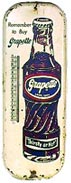
Montana astroturf

Daily Kos, one of the prominent liberal blogs, calls Dirt Between Light Bulbs the first astroturf GOP blog. Follow the link to the Swing State Project for more info about these guys. And more here from Matt Singer.

In Dirt's favor: It provided the links that led to all of the above. And Dirt claims that nobody is getting paid to run the blog. OK by me, but you had better be telling the truth. I don't care how your politics lean, but I do care where your money comes from.

Sunday, April 10, 2005

Publisher of the Year

As some readers may suspect, I am no particular fan of Lee Enterprises. So you might anticipate I would have a snide response to the decision by Editor & Publisher magazine (subscription required) to name Lee CEO Mary Junck as Publisher of the Year 2005.

Actually, I don't -- except perhaps to point out that CEO and publisher are not exactly the same job, even when they are held by the same person. But that's E&P's worry, not hers.

Ms. Junck probably deserves the accolade if for no other reason than Lee's huge purchases of the Howard Publications and Pulitzer chains. That's an impressive investment in the future of a mature and probably permanently declining industry. Impressive, even if not smart -- and possibly smart, too.

A sidebar in the E&P story asks the crucial question: "Just how good are Lee's papers?" The puff-filled article quotes only one naysayer: Nathaniel Blumberg, former dean of the University of Montana journalism school. Nathaniel doesn't say much to E&P, but he says it emphatically: "My contempt for Lee Enterprises and what it has done to the journalism profession runs so deep that I prefer not to be quoted at this time."

Me neither.

Heavy handed

An e-mailer suggests that one reason the free weeklies were able to get House Bill 474 passed (see numerous posts below) was that "Lee Newspapers has one of the most obnoxious lobbyists in the session." He adds, "I guess there is some symmetry there."

The e-mailer may have a point. One senator said that the Lee lobbyist (who also lobbies for the Montana Newspaper Association -- a disturbing conflict of interest) "threatened me with the wrath of the Gazette."

Can that be? Would a major news organization leverage its near-monopoly status to stifle free-market competition for government services? Hmmm. I'll have to think it over and get back to you.

Saturday, April 09, 2005

Up with stupidity

"I just don't think we can legislate against stupidity," Sen. Joe Balyeat this week during a legislative debate on banning smoking in public buildings.

He's right. We probably can't legislate against stupidity. But that doesn't mean we have to elect it to office.

Wednesday, April 06, 2005

Whew

House Bill 474, the Free Weekly Legal Advertising Relief Act, has passed the Senate on third reading. Now it goes back to the House with a minor amendment.

So the little guys do occasionally win one.

Tuesday, April 05, 2005

Back to life

Guess I was too pessimistic below about House Bill 474. The Senate just voted to reconsider the bill, and it has been scheduled for a second reading.

I don't have any details yet. Matt Gibson, who has been fanning the flames on behalf of Montana's free weeklies, heard from a senator last night who said he thought there were enough votes to change the outcome. As of this morning, the bill still had failed, 25-23. Somewhere during the day, it picked up another vote to make it 25-24. I sent out four or five messages to senators last night, and a few more this morning.

Now, by a 30-20 vote cast this evening, we will get another chance. Since the bill already has passed the House, with a little luck we're in. Cool.

The breakdown on this evening's voting isn't up yet. In the House, all the negative votes were cast by Republicans, but party lines were less visible in the Senate on Monday. Republican Jeff Essmann, for instance, voted for us, while a good Democrat, Jim Elliott (whose column occasionally appears in The Outpost), voted against us. Republican Corey Stapleton voted against us, but so did Democrat Jon Tester.

As I was firing off e-mails this morning, it occurred to me that, for the first time in my life, I was lobbying. It was a weird feeling - violating my oath of political celibacy. Guess I am a businessman after all.

UPDATE: HB 474 has now passed on second reading, 26-22. It goes to a third reading on Wednesday.

Butcher block

City Lights finds itself agreeing with Sen. Ed "The Vegetable" Butcher that a bill requiring school districts to adopt anti-bullying policies is a bad idea. Note to Ed: Anytime you find yourself tempted to agree with Sen. Butcher, you should rethink your position.

I don't like the state dictating every step school districts take (and I like it even less when the feds do it) but this bill doesn't dictate a policy; it simply requires school districts to adopt one that includes a process for handling complaints. That seems to be a sufficiently modest and sensible approach to dealing with a real problem that is at least anecdotally linked to school shootings.

And it might even be good news for bullies. The lives that are saved could be theirs.

Monday, April 04, 2005

Whittled down again

Apparently my optimism expressed below about the passage of House Bill 474 was excessive. I just got an e-mail from Matt Gibson saying that the Senate voted the bill down, 26-23, and it probably is dead for the session. Apparently the paid-circulation papers and their lobbyist got to enough senators to beat it down.

For what it's worth, here's some of the written testimony I submitted to the House:

Newspapers were born free, but everywhere they are in chains. The number of independently owned daily newspapers in the United States has fallen from a peak of more than 2,100 to about 250 today. Many of those absent newspapers went out of business; most of the rest were absorbed by increasingly larger and increasingly more concentrated newspaper chains.

But in recent decades, alternatives have arisen. Free distribution weekly newspapers are published in nearly every major American city. During the 1990s, these newspapers doubled in circulation and revenue.

In Montana, free and independent weeklies have blossomed in the last dozen years: The Missoula Independent, the Butte Weekly, The Billings Outpost, the Queen City News here in Helena. These papers offer a genuine alternative to established weeklies and dailies, and have readerships that rank favorably with most of the state's long-established newspapers.

I regret that I cannot be here personally today. As a small publisher, I wear many hats, and I have a couple of those on today. But I do want to take a few moments to ask that we be given the same right that paid newspapers have to compete for legal notices placed by county government. I, and the publishers of these other weeklies, seek no special favors or breaks. I'm not asking that legal ads be awarded to us. I'm just asking that we be given a chance to compete. I'm not even asking for a level playing field; I just want a chance to get in the ballgame.

The Montana Newspaper Association, of which The Outpost has been a member since we started business, opposes this legislation. It will argue, among other things, that the bill, as offered, defines newspaper too loosely. The association's larger concern is that counties may use this bill as a wedge to give up legal notices in newspapers altogether.

I agree with the association that that would be a mistake. No entity in any community does more to keep the public aware of what local government is up to than the local newspaper. It just makes sense that newspapers should remain the place where citizens go to keep track of legal matters that affect them and their community.

But I believe that newspapers, like government, must be open to the changes that are sweeping communications at a pace that I have never before seen in the two decades I have practiced this craft. Without question, free weekly newspapers are a substantial portion of that change. They will play an increasingly vital role in helping to fill democracy's need for robust debate on the issues of the day. It is time that they were accepted as a legitimate and lasting force in Montana communities. Allowing them to accept county legal notices will be an important step in their growth.


So it's another loss for the little guy. I wish I could be the big guy for just one day.

Sunday, April 03, 2005

Gerrymandering

Dirt Between Light Bulbs is doing a good job of trying to track down answers to questions I raised below about Democratic gerrymandering. It's worth scrolling down through several entries to get the full story.

Saturday, April 02, 2005

One step closer

House Bill 474, which I wrote about here, has passed out of the Senate Judiciary Committee by a 7-5 vote. The bill would give free weeklies like ours a chance to bid on county legal ads -- potentially a tidy, although not terribly profitable, little sum.

The bill already passed the House by an 84-14 margin, so chances look good. If it becomes law, the most satisfying aspect will be that it is opposed both by the Montana Newspaper Association and by Lee Enterprises -- which, coincidentally enough, both have the same lobbyist. It will be a nice little win for the little guy, helped along, primarily, by Matt Gibson of the Missoula Independent.

Friday, April 01, 2005

Making money

In comments on my Blogcasting post below, David Summerlin makes thoughtful suggestions about commercial prospects for blogging. He suggests that an alternative model to advertising may be needed, as well as an alternative to highly populated uppercrust blog sites.

I wish I had a clue what to offer. New West obviously has its own ideas about how to make money at this, and I wish them well, I think, but I'm not convinced that approach will work. Actually, I'm not convinced any approach will work.

But just to toss something out: What if you had four bloggers sharing one site, each putting in a couple of hours a day. That way everybody has enough time to keep a day job, but yet the blog gets full-time reasonable attention. With that much blogging, I think, you could become the premier Montana news and commentary site in the state (although without, I fear, much original reporting).

It could make money from:

1. Whatever ads were available.
2. The tip jar.
3. Annual memberships (?).

Nobody would get rich, but everybody might get a little cash. And it would be a must read for all folks serious about Montana affairs. Or maybe not. Anybody got a better idea?

Extreme moderates

I went to a meeting of a new campus group at Rocky Mountain College on Wednesday. The idea is to organize at the grassroots level to create the Moderate Party, a rational alternative to the partisanship and bickering of the two major parties.

The name of the party elicited a few inevitable chuckles. For example, when the next meeting was set, the time was placed at 6:15 p.m. -- exactly midway between 6 p.m. and 6:30 p.m.

I am naturally skeptical about the odds of rallying support for a rational approach to politics, but I'm happy to see college students meeting to discuss such matters. Even if nothing comes of it but a few debates on the nature of political compromise, it will be time well spent. On the basis of what I have heard, the students sounded more libertarian than moderate -- an idea also worth exploring.

But that can be changed. That could be my opportunity. Since Tony Lewis keeps labeling me as an "extreme moderate," maybe I could carve out a niche as a leader of the extreme wing of the Moderate Party.

If you would like any more information about all this, let me know. I will put you in touch.